Huntsville's wet season is the whole problem
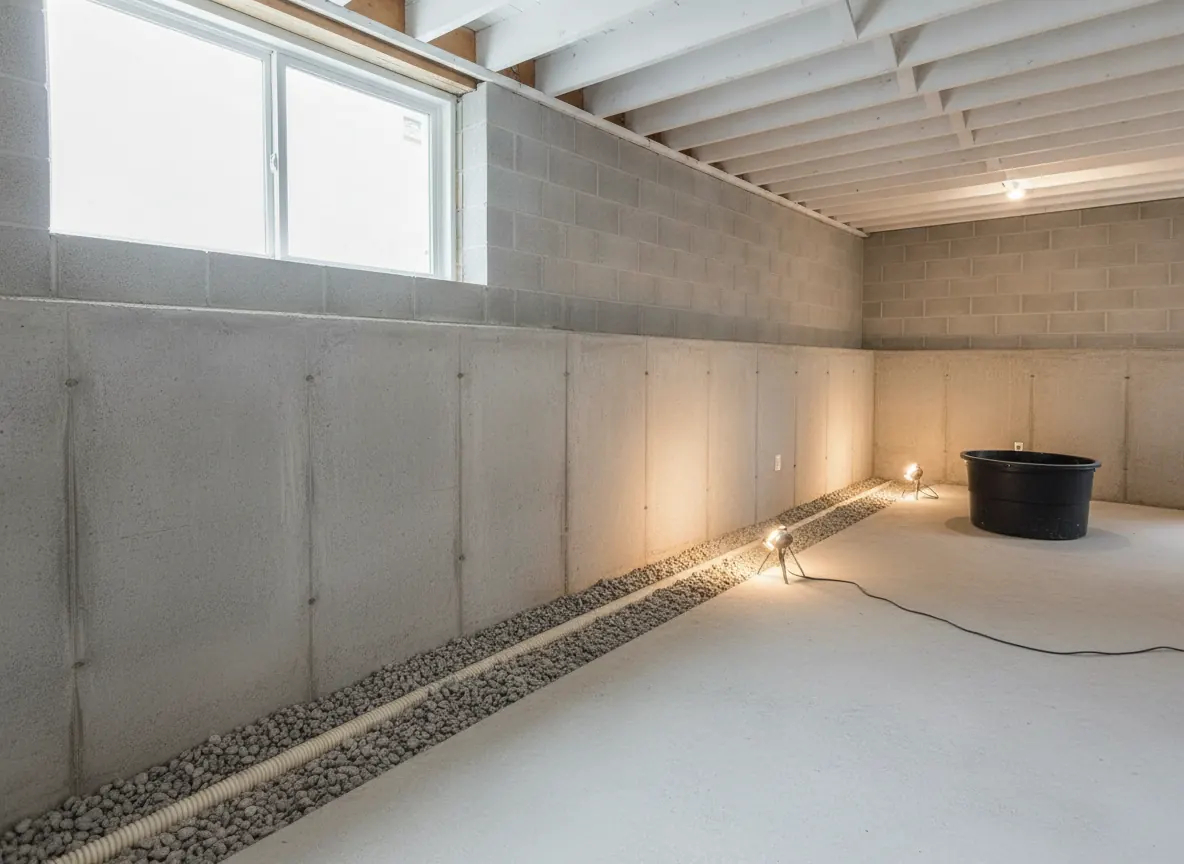
The NOAA 1991–2020 normals for Huntsville International Airport describe a wet-winter climate: 54.29 inches of precipitation a year, December the wettest month at 5.87 inches, and December through February the wettest season. The airport records 15.5 days a year with an inch or more of rain, and more of them fall in December than in any other month. Slow-draining clay holds that water against foundation walls and under slabs, which is where hydrostatic pressure, seepage through block cores and water at the cove joint come from.
The wet years stand out in the record. In 2009 Huntsville measured 67.70 inches, and on December 8–9 of that year the National Weather Service recorded 4 to 8 inches of rain across Madison, Morgan and nearby counties with widespread flash and river flooding in Morgan and Madison Counties. In 2020 the total reached 70.52 inches, Huntsville's fourth-wettest year, per the UAH Alabama Climate Report, as summarized. Those are the winters when basements that had never leaked started to, and when vented crawl spaces held standing water for weeks.
Local flooding history runs along the named streams. The June 28, 1999 storm put 6 to 7 inches of rain on the Aldridge Creek gauges and the creek overflowed from Drake Avenue through Jones Valley, damaging about 300 homes and businesses; the City later widened the channel and bought out homes in the floodway. Indian Creek on the west side and the Flint River on the east are the other watersheds the City's flood mitigation plan tracks. Floodplains are mapped only for rivers and major streams, so a wet basement two miles from any creek is almost always a site-drainage problem rather than a floodplain one.