Foundation Crack & Wall Repair in Huntsville, AL

A crack is a symptom. Whether it needs a tube of sealant, injection, carbon fiber or wall anchors depends on its shape, direction and whether it is still moving. We connect Huntsville-area homeowners with independent local foundation repair, crawl space and waterproofing companies for free, no-obligation quotes.

Get a Free Quote
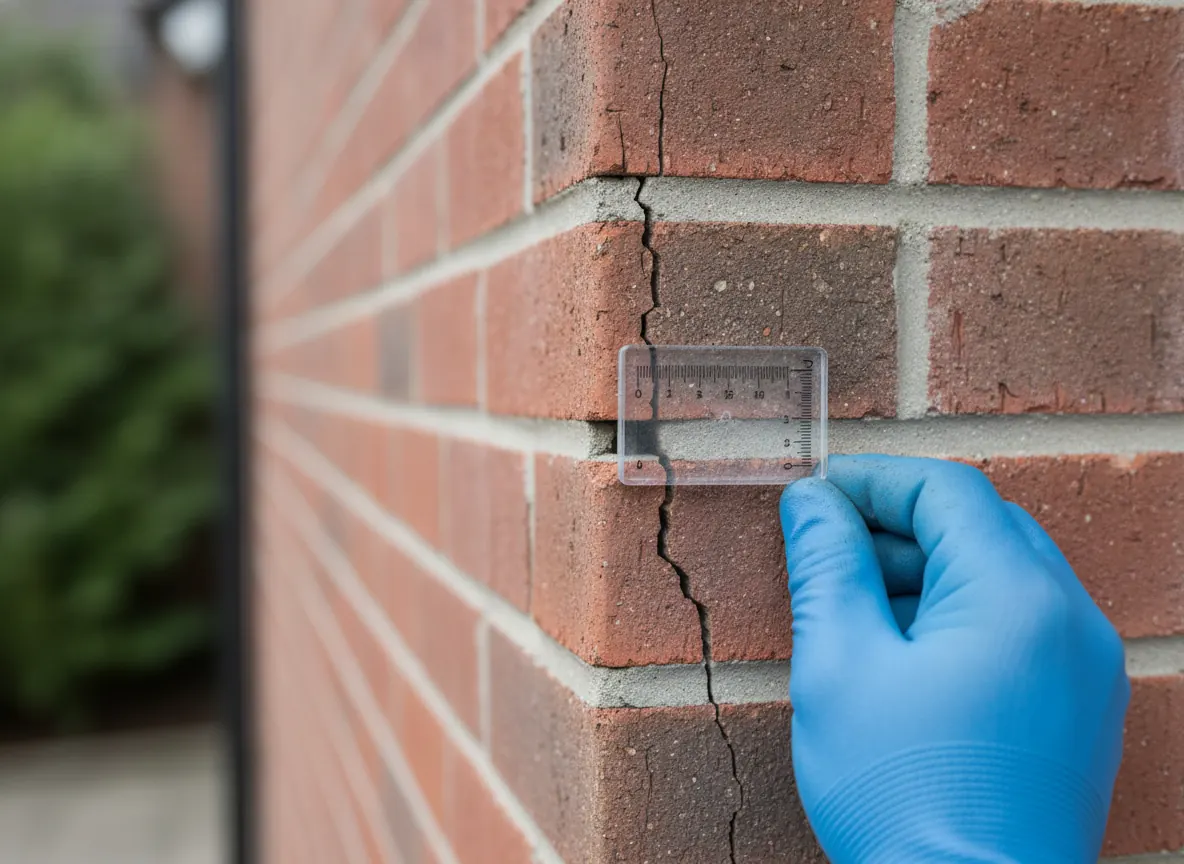
Stair-step crack in brick veneer measured with a crack gauge

Reading the crack: stair-step, vertical, horizontal

Stair-step cracks follow the mortar joints of brick veneer or block walls in a staircase pattern. They are the classic sign of differential settlement: one part of the footing has moved relative to the rest. Here that often tracks the dry season, when clay shrinks. September is the driest month at 3.49 inches against a 54.29-inch annual normal (NOAA 1991–2020, Huntsville International Airport), and the 2016 drought, with 0.47 inches in September and 0.77 inches in October, was followed four years later by 70.52 inches in 2020, Huntsville's fourth-wettest year, per the UAH Alabama Climate Report, as summarized. That shrink-then-swell sequence is what opens and reopens stair-step cracks.

Vertical and near-vertical cracks in a poured concrete wall are often shrinkage from the original cure. Narrow, uniform and dry, they are a sealing matter. Wider at one end, or paired with a step in the floor, they point to movement.

Horizontal cracks in a basement or crawl space wall, especially partway up a block wall, are the ones to take seriously. They usually mean lateral soil pressure is pushing the wall inward. Saturated clay in the wet winter months is the typical load. A horizontal crack with measurable bowing or a wall that leans at the top calls for reinforcement, not sealant.

Repair methods by problem

Epoxy and polyurethane injection

For cracks in poured concrete that are not actively moving. Ports are set along the crack, the surface is sealed, and the material is pumped in under pressure. Epoxy bonds the two faces structurally; polyurethane foam expands to stop water in a damp or actively leaking crack. Injection is not used on hollow block walls.

Carbon fiber straps

For block or poured walls that have bowed modestly and need to be held where they are. Woven carbon fiber strips are bonded to the inside face of the wall at set spacing and anchored at top and bottom. They add little thickness and stop further movement rather than pushing the wall back.

Steel I-beams and channels

For walls with more bowing than carbon fiber is rated for. Vertical steel beams are set against the wall, anchored to the footing at the bottom and to the floor framing at the top. Some can be tightened over time to recover part of the lean.

Wall anchors

For walls where there is room to dig outside. A steel plate on the inside of the wall connects through a rod to an earth anchor set in undisturbed soil several feet out. Anchors can be tightened periodically, which gives them a chance of straightening the wall over seasons. They need open ground outside the wall.

A wall that has settled rather than bowed is underpinned with piers; see house leveling and piers. Where water is involved, drainage goes in alongside the reinforcement; see waterproofing.

Crack monitoring: cheap, slow and worth it

Not every crack needs a repair this month. A crack monitor, a two-piece gauge glued across the crack, shows whether the crack is widening, closing or stable, and in which direction. Dated pencil marks and a photo with a ruler do a rougher version. Read it monthly through one full wet-dry cycle, roughly October through the following March, and keep the record. A crack that moves seasonally and returns is following the soil; one that only grows is not. The record is what a professional engineer and a buyer will want to see.

When a professional engineer should be involved

An engineer's report or engineered repair design comes only from an Alabama-licensed professional engineer (PE). A contractor's free evaluation is a sales estimate, not an engineering opinion.

Bring in a PE when a wall bows or leans, when monitoring shows a crack still growing, when contractors propose very different fixes, when you are buying or selling and want an opinion independent of anyone bidding the repair, or when a lender or insurer asks for a letter. Ask whether the City will want an engineer's letter for structural wall work. A structural engineer's report typically runs $300 to $1,000 nationally, up to $3,000 for complex cases. More on our foundation inspection and engineer's report page.

Typical costs

Typical national ranges from This Old House (2026), Bob Vila (2024), HomeGuide (2026) and Angi (2026): estimates, not quotes.

ItemTypical range
Crack repair, per crack$250–$800; professional epoxy or polyurethane injection $800–$1,500
Bowing or cracked wall reinforcement (carbon fiber or steel)$4,000–$12,000; bowing basement wall $5,000–$15,000
Structural engineer's report$300–$1,000 (up to $3,000 for complex cases)

See the cost guide for more.

Licensing, permits and what to ask

Alabama requires a Home Builders Licensure Board (HBLB) residential home builder license for any repair to a home when the cost exceeds $10,000 (Ala. Code §34-14A-2(16)); the HBLB says work that affects structural integrity needs the unlimited license, not the limited one; licensees must show their license number in advertising and contracts (§34-14A-7). Jobs under $10,000 need no HBLB license; many single-crack injections fall under that line. Ask for the company's HBLB license number and check it on the HBLB lookup before signing.

In the City of Huntsville a permit is required when labor and materials exceed $250 or any structural work is involved (Inspection Department FAQ); the contractor pulls it and must hold a City of Huntsville business license. The City of Madison's residential permit application has "Repairs" and "Foundation Only" permit types. Ask for the warranty in writing: term, what voids it, whether it transfers to a buyer and any transfer fee. Ask your insurer what your policy covers.

Request free quotes for crack or wall repair, or call {PHONE_LINK}; we usually reply the same day.

Crack and wall repair FAQ

Which foundation cracks are serious?

Hairline vertical cracks in poured concrete are usually shrinkage and are sealed to stop water. Stair-step cracks through block or brick mortar joints signal differential movement and need the cause found. Horizontal cracks in a basement or crawl space wall, cracks wider at one end, and any wall that bows or leans are structural and warrant a professional evaluation and, where warranted, a licensed professional engineer's opinion.

How much does foundation crack repair cost?

Typical national ranges from This Old House (2026), Bob Vila (2024), HomeGuide (2026) and Angi (2026): crack repair $250 to $800 per crack, with professional epoxy or polyurethane injection $800 to $1,500; carbon fiber or steel reinforcement of a bowing or cracked wall $4,000 to $12,000; a bowing basement wall $5,000 to $15,000. These are estimates, not quotes; the number of straps or anchors sets the price.

Can I use a DIY crack repair kit?

A kit can seal a thin, non-moving vertical crack in a poured wall that only leaks. It cannot fix a crack that is still opening, a stair-step crack in block or brick, or a horizontal crack, because those come from movement or pressure that sealing does not address. If a patched crack reopens or the crack is wider than a coin, get a professional evaluation.

When should a professional engineer look at a crack?

An engineer's report or engineered repair design comes only from an Alabama-licensed professional engineer (PE); a contractor's free evaluation is a sales estimate, not an engineering opinion. Involve a PE when a wall bows or leans, when cracks keep growing on a monitor, when a lender, buyer or insurer asks for a letter, or when contractors propose very different repairs for the same wall.

Do wall repairs need a license and permit in Huntsville?

Alabama requires a Home Builders Licensure Board (HBLB) residential home builder license for any repair to a home when the cost exceeds $10,000 (Ala. Code §34-14A-2(16)); the HBLB says work that affects structural integrity needs the unlimited license. Jobs under $10,000 need no HBLB license. In the City of Huntsville a permit is required when labor and materials exceed $250 or any structural work is involved; the contractor pulls it.

Cracks, sticking doors or a sloping floor? Get a clear foundation quote.

Free, no-pressure quotes across Huntsville, Madison, Athens, Decatur, Harvest and Madison County.

Call NowFree Quote